Chapter 2 of 2 · Module 1
Introduction to the Ontario Osteoporosis Strategy
The provincially funded engine behind Ontario's fracture clinics — and the program most FLS nurses in Ontario work within.
- Explain the mandate and three priority areas of the Ontario Osteoporosis Strategy (OOS), and describe why secondary fracture prevention is its central focus.
- Describe the Fracture Screening and Prevention Program (FSPP) model — including the Fracture Prevention Coordinator (FPC) role — and identify the key stakeholders and supporting programs (including BoneFit™).
Introduction
The Ontario Osteoporosis Strategy (OOS) is a provincially funded initiative, operating since 2005, aimed at reducing fragility fractures and promoting bone health, with the overall goal of reducing hip and other osteoporotic fractures in Ontario.1,3 Its mandate is to reduce the morbidity, mortality and costs associated with osteoporotic fractures.3
The need is substantial. One in three women and one in five men will experience a fragility fracture in their lifetime, and the risk of another fracture within a year of a vertebral or hip fracture is significantly elevated.2 Critically, 40% of people who fracture a hip had a previous non-hip fracture that was not recognized as a warning sign of osteoporosis2 — the “care gap” your screening role exists to close. And the strategy is working: since 2005, hip fracture rates have fallen in every age group, with the steepest decline — 25.1% — among Ontarians aged 65 to 79.3
2.1 About the OOS
The OOS is funded by the Ontario Ministry of Health and delivered through a coordinated network of clinical, academic and community partners.1 Its objectives:1
- Reduce osteoporotic fractures — decrease the incidence of hip and other osteoporotic fractures;
- Collaborative care — bridge care gaps with key partners such as the Ministry of Health, Osteoporosis Canada (OC) and leading hospitals;
- Education and evidence-based care — advance care through education, evidence-based solutions, and specialized programs for the elderly and long-term care (LTC).
2.2 Strategic Goals & Priority Areas
| Priority area | Aim | In practice |
|---|---|---|
| 1. Fracture Prevention | Reduce the risk of hip and other osteoporotic fractures in Ontario | FSPP screening in fracture clinics; LTC fracture-prevention strategy |
| 2. Health Professional Education & Outreach | Increase evidence-informed practice by healthcare professionals | Beyond the Break webinars; EMR Osteoporosis Toolkit; BoneFit™ training |
| 3. Patient Education & Self-Management | Increase at-risk patients’ capacity to understand and manage fracture risk | Patient/caregiver resources; Your Guide to Strong Bones; Too Fit to Fracture materials |
Two demographic pressures make this urgent:2 by 2041 an estimated 25% of the population will be 65+ (4% aged 85+) with annual hip-fracture costs projected to reach $2.4 billion; and fragility fractures drive excess mortality, morbidity, chronic pain and institutionalization — each fracture raising the risk of the next.
2.3 Stakeholders and Partners
| Stakeholder | Role within OOS |
|---|---|
| Ontario Ministry of Health | Funds and supports core OOS components |
| Osteoporosis Canada (OC) | Provides national guidelines; collaborates with healthcare professionals |
| McMaster University | Leads the OOS Long-Term Care strategy and osteoporosis education |
| Women’s College Hospital | A pioneer in the strategy, continually advancing osteoporosis care |
| Unity Health Toronto | Offers education pivotal to OOS objectives |
| Ontario Orthopaedic Association | Champions the Fracture Screening and Prevention Program |
| Geras Centre for Aging Research | Programs for the elderly; long-term care research |
| Ontario College of Family Physicians | Collaborative research and primary-care engagement |
2.4 Programs and Services
Fracture Screening and Prevention Program (FSPP)
The FSPP — Ontario’s fracture liaison model — was established in 2007 for men and women aged 50+ with fragility fractures, in collaboration with OC, the Ontario Orthopaedic Association, the Ontario College of Family Physicians and hospitals across the province.4 It is delivered by 25 Fracture Prevention Coordinators (FPCs) across 36 fracture clinics (some based in Family Health Teams), collaborating with orthopaedic surgeons, allied health, diagnostic imaging, clinic staff and primary care.4
| FSPP objective | Description |
|---|---|
| Identification & risk assessment | Screen fragility fracture patients; assess risk, incl. bone mineral density (BMD) testing |
| Enhanced clinic support | Improve education and referral support within fracture clinics |
| Specialist access | Local specialist or telemedicine consultation for complex / rural / remote cases |
| Diagnostic tools | Promote appropriate use of BMD and fracture-risk assessment |
| Integration of care | Integrate post-fracture care, rehab and osteoporosis management in acute settings |
Long-Term Care, education and communications
The OOS LTC program supplies clinical tools and guidelines, staff education, and resident resources including falls-prevention programming.4 Beyond the Break delivers virtual education webinars; the EMR Osteoporosis Toolkit provides screening forms for OSCAR, PS Suite and Accuro; Fracture Link is the program newsletter; and Ontario clinics can order free pads of Your Guide to Strong Bones and Too Fit to Fracture.3
BoneFit™
BoneFit™ is an evidence-informed exercise training workshop for healthcare professionals and exercise practitioners working with people with osteoporosis.5 Delivered in-person and virtually with an emphasis on safety, it has run 90+ workshops, trained ≈2,000 professionals, across 60 locations in Canada.5
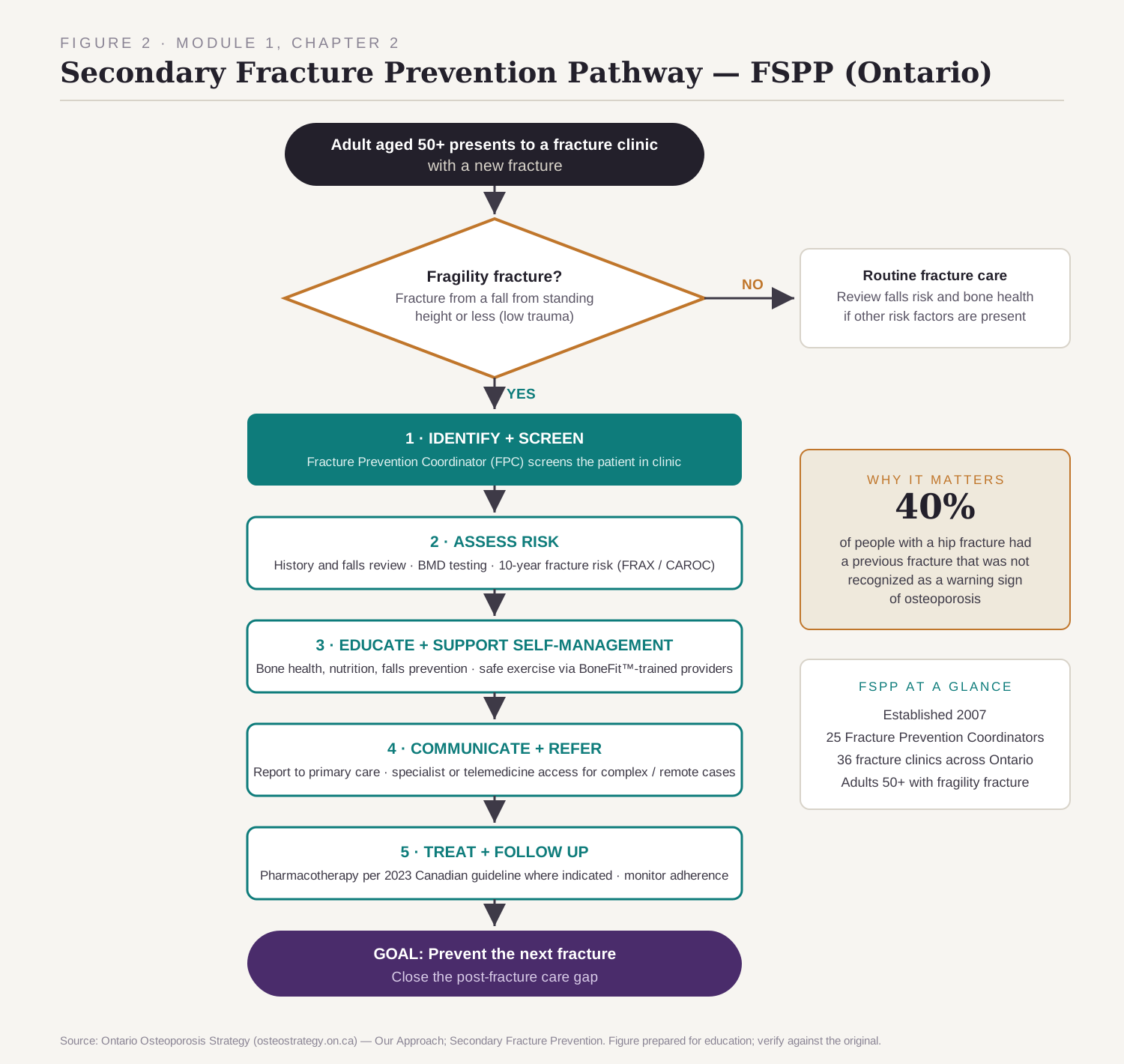
Interactive · Decision Tree
Fragility-fracture triage: who enters the FSPP pathway?
Work a patient through the screening decision. Restart and test edge cases.
2.5 Websites
- Ontario Osteoporosis Strategy: osteostrategy.on.ca
- Find an FSPP site: osteostrategy.on.ca/find-an-fspp-site
- Beyond the Break webinars: osteostrategy.on.ca/btb-main
- BoneFit™: bonefit.ca · Locator map: bonefit.ca/bonefit-map-locator
Summary — Key Takeaways
- The OOS (since 2005, provincially funded) exists to reduce the morbidity, mortality and costs of osteoporotic fractures.1,3
- Priority areas: fracture prevention · health professional education & outreach · patient education & self-management.2
- 40% of hip fracture patients had a prior, unrecognized fracture — the care gap your role closes.2
- The FSPP (est. 2007): 25 FPCs, 36 fracture clinics, adults 50+ with fragility fractures.4
- Stakeholders: Ministry of Health, OC, McMaster, Women’s College, Unity Health, Ontario Orthopaedic Association, OCFP, Geras Centre.1
- BoneFit™ trains professionals in safe exercise for low bone mass — with a public locator map for referrals.5
- Ontario hip fracture rates: down in every age group; −25.1% in ages 65–79 since 2005.3
End-of-Chapter Quiz — Chapter 2
- Ontario Osteoporosis Strategy. About Us [Internet]. [cited 2026 Aug 15]. Available from: https://osteostrategy.on.ca/aboutus/
- Ontario Osteoporosis Strategy. Our Approach [Internet]. [cited 2026 Aug 15]. Available from: https://osteostrategy.on.ca/who-we-are/
- Ontario Osteoporosis Strategy. Home page [Internet]. [cited 2026 Aug 15]. Available from: https://osteostrategy.on.ca/
- Ontario Osteoporosis Strategy. Secondary Fracture Prevention [Internet]. [cited 2026 Aug 15]. Available from: https://osteostrategy.on.ca/fracture-prevention/
- Bone Fit™ [Internet]. Toronto (ON): Osteoporosis Canada; [cited 2026 Aug 15]. Available from: https://bonefit.ca/
- Morin SN, Feldman S, Funnell L, Giangregorio L, Kim S, McDonald-Blumer H, et al. Clinical practice guideline for management of osteoporosis and fracture prevention in Canada: 2023 update. CMAJ. 2023;195(39):E1333–48. Available from: https://www.cmaj.ca/content/195/39/E1333